
Finding Davidson County Residents
Davidson County does not maintain one public list of everyone at every address. Start with the record that matches the question. The assessor and Parcel Viewer are useful when an address or owner name is known. The Tennessee voter lookup is a one-person registration check. A deed index can connect parties to a parcel, and Metro Archives holds the historical directories, deeds, wills, newspapers, and maps that fill older gaps. Each source is evidence of a particular event, not a promise of current residence.
Write down the full name, a middle initial, a known address, an approximate date, and a spouse or relative when available. That small worksheet prevents a same-name result from being treated as the right person. Property ownership is not proof of occupancy, and a voter result does not list every person in a household. For a whole street, the address sequence belongs on the Davidson County street directory page rather than in a name-only search.
- Search the Davidson County Assessor by owner, address, or map and parcel number. Keep both the situs and mailing address.
- Use Tennessee Voter Registration Lookup as a registration and status check for one identified person.
- Follow a parcel to the Davidson County Online Access Portal and record grantor, grantee, recording reference, and legal description.
- For an earlier household, consult the Metro Archives directory run and nearby census, obituary, deed, or probate evidence.
- When an online index ends, ask the named custodian for its counter, archive, or Tennessee Public Records Act request route.
Davidson County Parcel Clues
The Assessor WebPro search accepts a search term for an owner, property address, or parcel ID. Its advanced search adds county, owner name, property address, subdivision, classification, sale-date range, parcel components, and sort choices. The property card can supply an owner, situs address, tax mailing address, classification, value, sale information, and map or parcel identifier. Keep the result date because the portal identifies a current tax roll, not a historic occupancy list.
| Search field | Use in a Davidson County resident trail |
|---|---|
| Owner Name | Try surname variations and the indexed name order. |
| Property Address | Street number is optional in advanced search; use a partial street if needed. |
| Map and Parcel | Connects the assessor card to the parcel map and legal record work. |
| Sale Date | Helps place an ownership change in a time sequence. |
The mailing address is often useful for locating a tax notice, but it may belong to an estate, business, or other location. Treat it as a lead. The physical, or situs, address identifies the parcel itself. Nashville Parcel Viewer adds map, zoning, ownership-history, property-history, assessment-history, and permit links.
The Assessor search landing page shows the starting point for Davidson County residents directory property work.
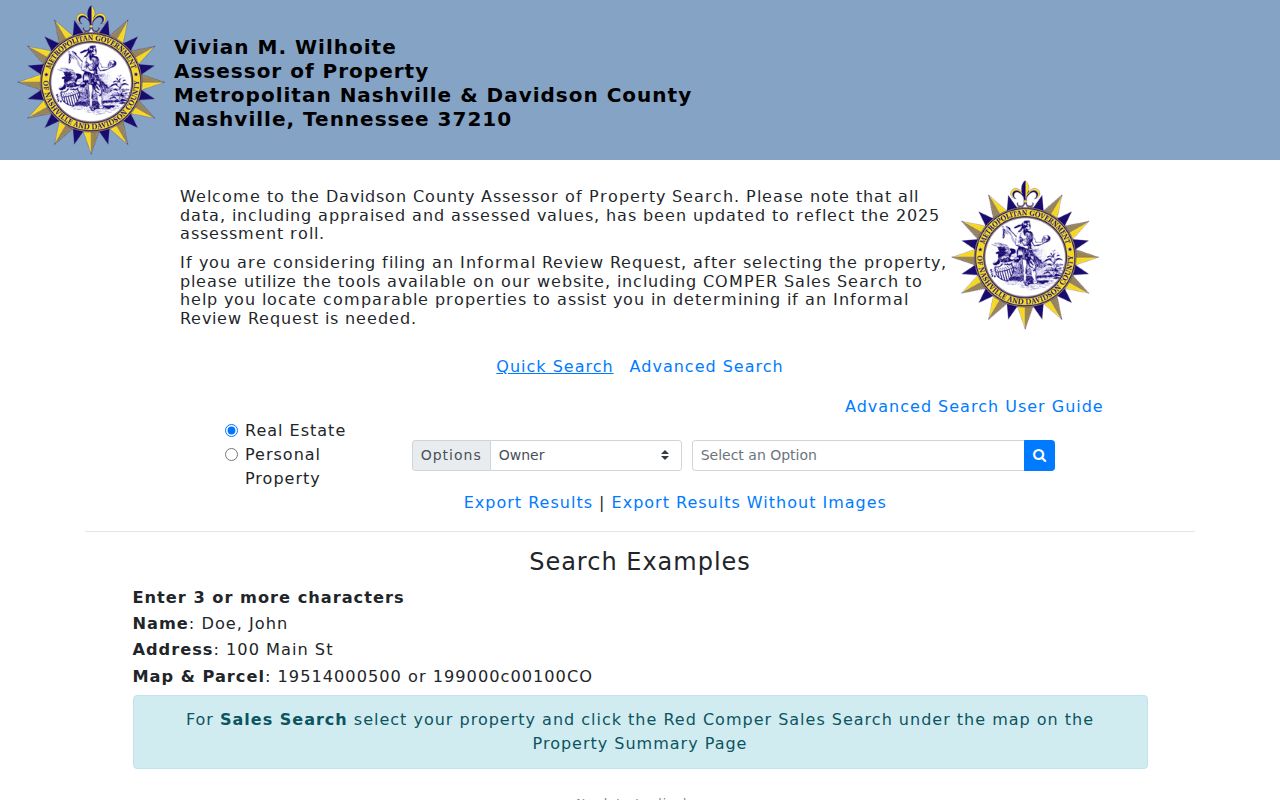
Use the result to identify a parcel and then verify its recorded history with the Register of Deeds.
Davidson County Record Terms
Record systems use a few terms that matter when a search moves beyond a name box. A precise note makes it much easier to return to the same record at an office counter or archive reading room.
- Parcel
- A tax and mapping unit for a piece of land or a condominium interest.
- Situs address
- The physical address attached to that parcel, which can differ from the tax mailing address.
- Index
- A finding tool that points to a deed, case, directory entry, or other record; it is not always the record image.
- Grantor and grantee
- The party transferring an interest and the party receiving it in a recorded instrument.
When a property changes hands, record the legal description as well as the street address. A street number can be renumbered, a parcel can be split, and a condominium or horizontal property regime can change how a home appears on a map. The legal description is the safer bridge between an assessment record and a deed.
Davidson County Records Offices
Davidson County records are divided by custodian. The Register of Deeds holds recorded land instruments. The Assessor maintains the property-tax roll and the Election Commission handles local voter-record questions. Nashville’s consolidated government does not combine those records into one master directory. Start online when a record has a portal, then use the office or Metro Archives when the needed year, image, or file is not published on the web.
Register of Deeds
300 Deaderick Street
Nashville, TN 37201
615-862-6790
Assessor of Property
Property-tax and parcel records
Davidson County, TN
Online property search
Election Commission
1281 Murfreesboro Pike, third floor
Nashville, TN 37217
615-862-8800
Davidson County Court Names
A court result can help distinguish people with the same name, but Davidson County does not have one all-purpose trial-court search. The Criminal Court Clerk Public Case Search is separate from the Circuit Clerk’s civil, probate, traffic, and related systems. Criminal search instructions say names should be entered as they appeared at arrest, and expunged matters are not shown. Search results are leads to the correct docket or file, not an identity verdict.
The Circuit Clerk offers free CaseSearch and a paid CaseLink option for some alerts and document images. Probate and Chancery material can identify heirs, estate roles, parcels, or case parties, especially when paired with a dated deed or obituary. Juvenile, sealed, and protected matters do not become public simply because a similar name appears in another index. Confirm which clerk has custody before requesting a copy.
Davidson County Voter Boundaries
Tennessee’s voter lookup is designed for a known person and can show registration or absentee status. It is not a public browse of every household on a street. Registration records exclude Social Security, driver-license, and Department of Safety identifiers, while protected participants can have special handling. A no-match should prompt spelling and former-name checks, followed by the Davidson Election Commission, not a conclusion that someone never lived there.
T.C.A. §§ 2-2-127 and 2-2-138 govern registration records and larger-county list practices. Compiled voter lists and history have statutory access conditions, including a political-purpose certification in the applicable setting. Voting history never reveals how a person voted. For a block or address question, start with parcels and historical directories, then use election material only through the authorized local process.
Current Davidson County Directories
Current Davidson County resident information appears in several limited public indexes rather than a single resident roll. The property system identifies assessed owners and parcels. Voter lookup is a registration tool for a known person. A deed index names parties to recorded documents. Court, business, license, custody, and registry systems answer narrower questions and should never be treated as a full household directory. Use the type of record to decide what a result actually confirms.
| Source | Who It Lists | Keeper | Access |
|---|---|---|---|
| Assessor roll | Assessed parcel owners | Assessor of Property | Free WebPro search |
| Voter lookup | One registrant’s status | Election Commission | State lookup and local contact |
| Recorded instruments | Grantors, grantees, liens, and other parties | Register of Deeds | Portal and office route |
| Business and license filings | Public entity or credential information | State agencies | Official state search |
| Neighborhood links | Organization contacts, not private rosters | Metro Planning | Public directory |
When the question is about one person, compare several dated sources instead of treating one hit as final. The Davidson County resident lookup workflow explains how name variants, parcel data, court roles, historical directories, and vital-event rules can be used together. A guest, co-resident, or other non-owner may leave no match in a property-owner search.
Davidson County Vital Access
Tennessee Vital Records holds state birth, death, marriage, and divorce certificates, while Davidson County offices and Metro Archives supply important local and older routes. T.C.A. § 68-3-205 protects birth records for 100 years and death, marriage, divorce, and annulment records for 50 years. During restricted periods, certificates go only to qualified applicants or people who can show a personal or property right. A certificate is not a substitute for a court file, and a current index is not a public directory.
The official Tennessee applications hub provides the birth, death, marriage, and divorce forms. The state says county health departments can issue statewide birth and death certificates for eligible applicants. Historical Davidson marriage research can begin with Metro Archives’ local indexes, which cover 1788 through 2017, before a researcher selects the appropriate custodian.
The state application page identifies the forms that control a certified-record request.
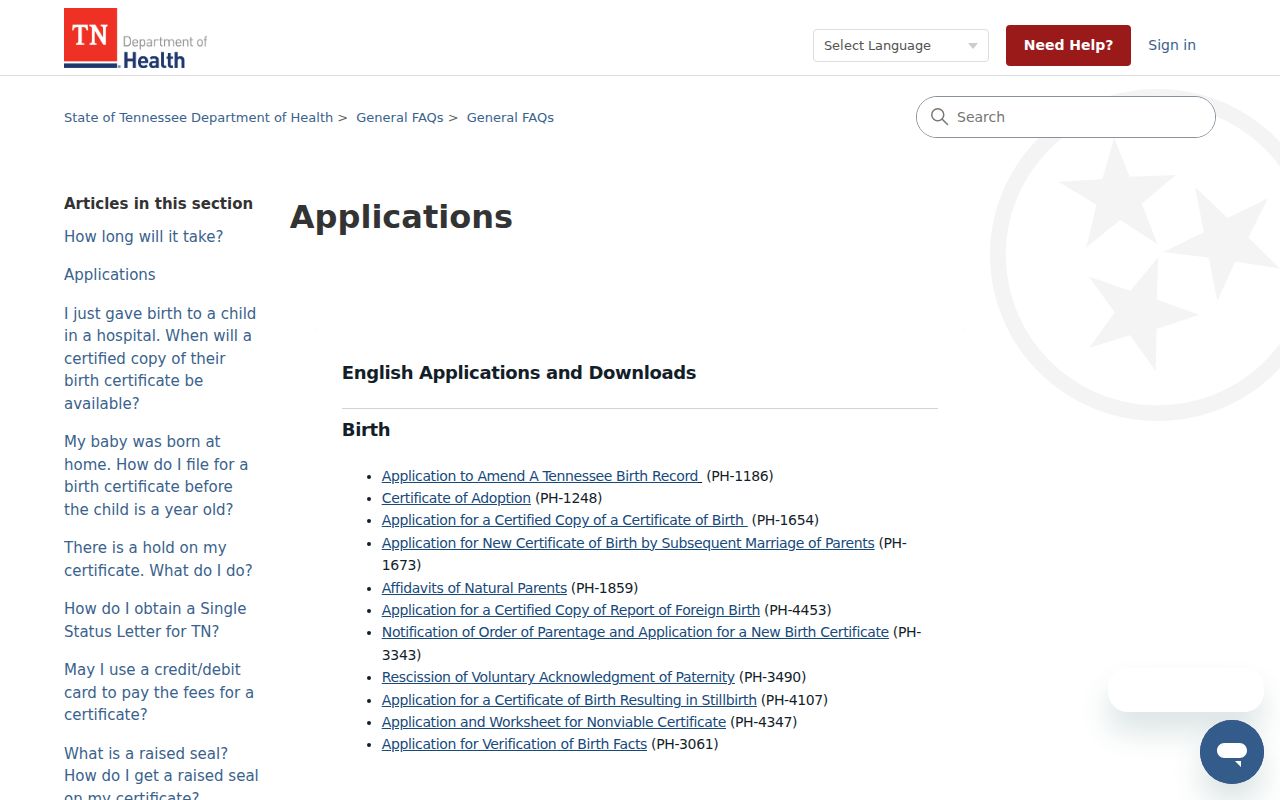
Eligibility, identification, purpose, and the event details on the form determine whether a request can proceed.
Davidson County Public Requests
The Tennessee Public Records Act, T.C.A. §§ 10-7-501 et seq., especially § 10-7-503, is a route to records that a public custodian actually holds. Inspection is generally free. If a requested record is not promptly available, the custodian must produce it, deny it in writing with the legal basis, or give a reasonable-time estimate within seven business days. A request should identify the record, approximate dates, address or parcel, and desired format, then go to the office that controls it.
Copy, labor, storage, certified-copy, and mailing charges are task-specific. The Office of Open Records Counsel’s ordinary schedule is a benchmark, not a promise for an instrument or court copy. Davidson County’s records landscape rewards a specific request: ask the Register about a recorded deed, Metro Codes about an unposted permit record, the Election Commission about its own voter process, or the archive about a named historical series.
Lawful personal use. Public records can support family history, an heir search, a property question, or consumer-safety research. Do not use any result to stalk, harass, intimidate, or harm a person.
Davidson County Name Checks
Public name searches work best when the record’s limits remain visible. The Criminal Court Clerk’s portal covers criminal cases, and the Sheriff’s tool is a current active-inmate and recent-booking snapshot. The Tennessee Bureau of Investigation registry has its own statutory purpose and misuse warnings. None is a substitute for a full residents directory, and none should be used to contact, threaten, or judge a person. Search the exact indexed spelling, then verify dates and the correct clerk.
The Criminal Court Clerk public search presents a name-search entry for Davidson County court records.
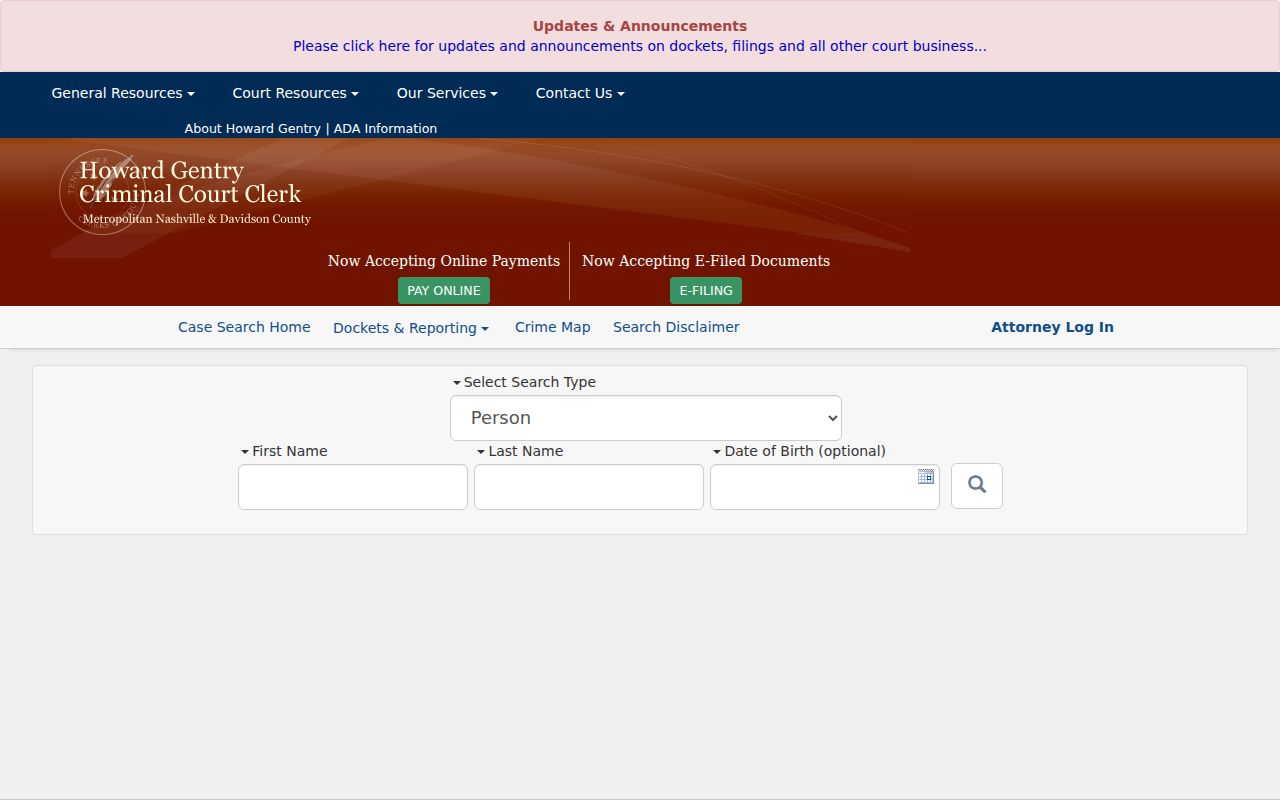
The form is a starting point for a docket search; the actual court and case status must be confirmed with the proper clerk.
Historical Davidson County Directories
Nashville City Directories run from 1853 through 2011 at Metro Archives. The earliest material is on microfilm, originals begin in 1869, and the books from 1853 through 1909 are principally name-based. From 1910 forward, the street section can be used in reverse to find an occupant at an address. Pre-1963 books do not provide complete county coverage, and suburban directories beginning in the 1950s help with places beyond earlier city limits. The full collection method is on the Davidson County city directory page.
A directory entry can contain a name, address, occupation, workplace, spouse or widow notation, and owner or renter mark. Copy the exact year, spelling, abbreviation key, and street-number convention. Pair a directory with the nearest census, deed, obituary, or probate record. A missing entry may reflect a coverage gap, a changed name, a different street form, or a skipped publication rather than a move.
Metro Archives is the local gateway to directory, deed, court, map, newspaper, and family-history collections.
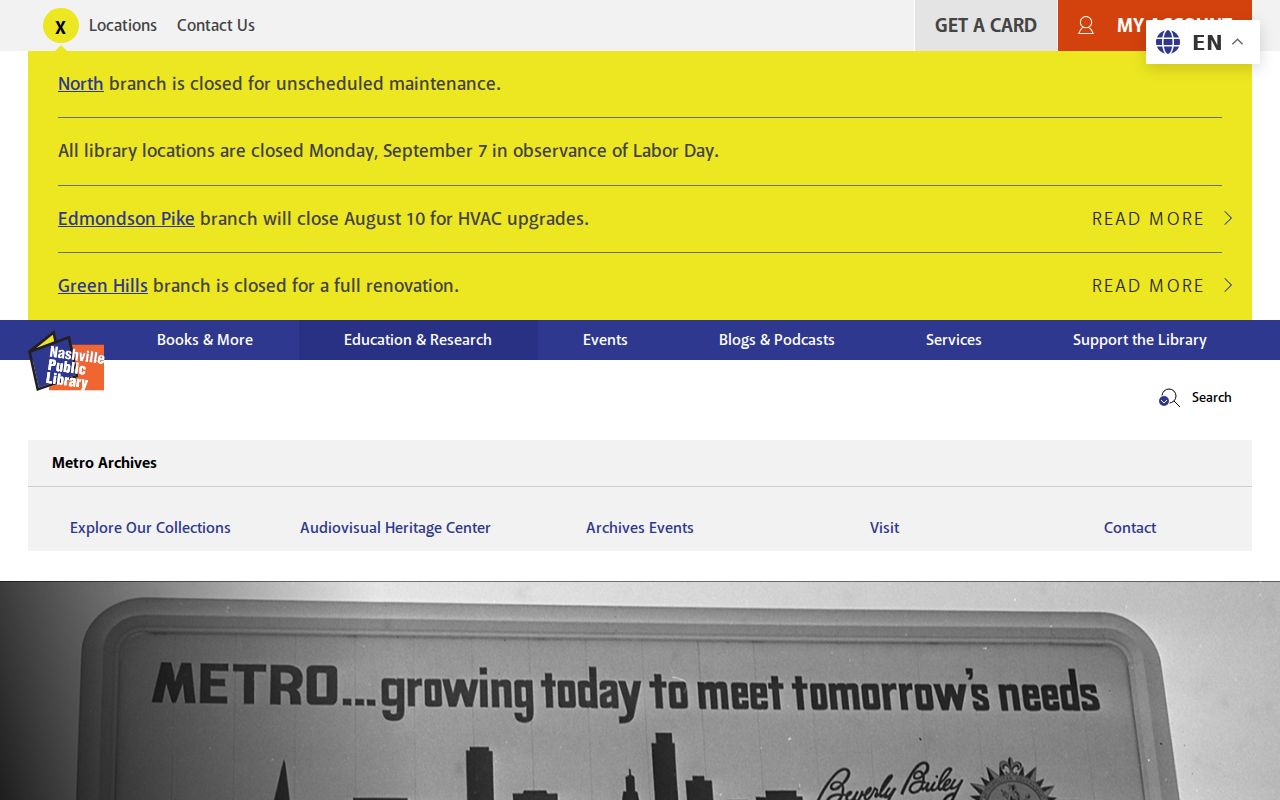
When a digitized directory year is missing, the archive’s in-person holdings and finding aids are the practical fallback.
Davidson County Verified Links
State business and professional searches can verify a public filing or credential when that relationship matters to a record trail. The Tennessee Secretary of State business-services hub includes entity filings, UCC records, annual reports, notary services, and certificates. Business results identify an entity or filing role, not a person’s home address. Tennessee’s Verify a License service similarly reports public credential status, expiration, and discipline where available.
The official business-services entry is a focused cross-check, not a substitute for Davidson County property or directory records.

Compare a business filing’s date and role with recorded documents before treating it as evidence about a resident.
Davidson County Registration Checks
A voter result can help confirm a registration record when a name, county, and other identifying facts already line up. It should not be used to build a household list or to infer a person’s voting choices. The state lookup directs a user to the local election commission when no record appears. Name variants, county selection, and a former surname are worth checking first, especially for historical or recently changed records.
The Tennessee voter lookup is the official entry for this limited Davidson County residents directory check.
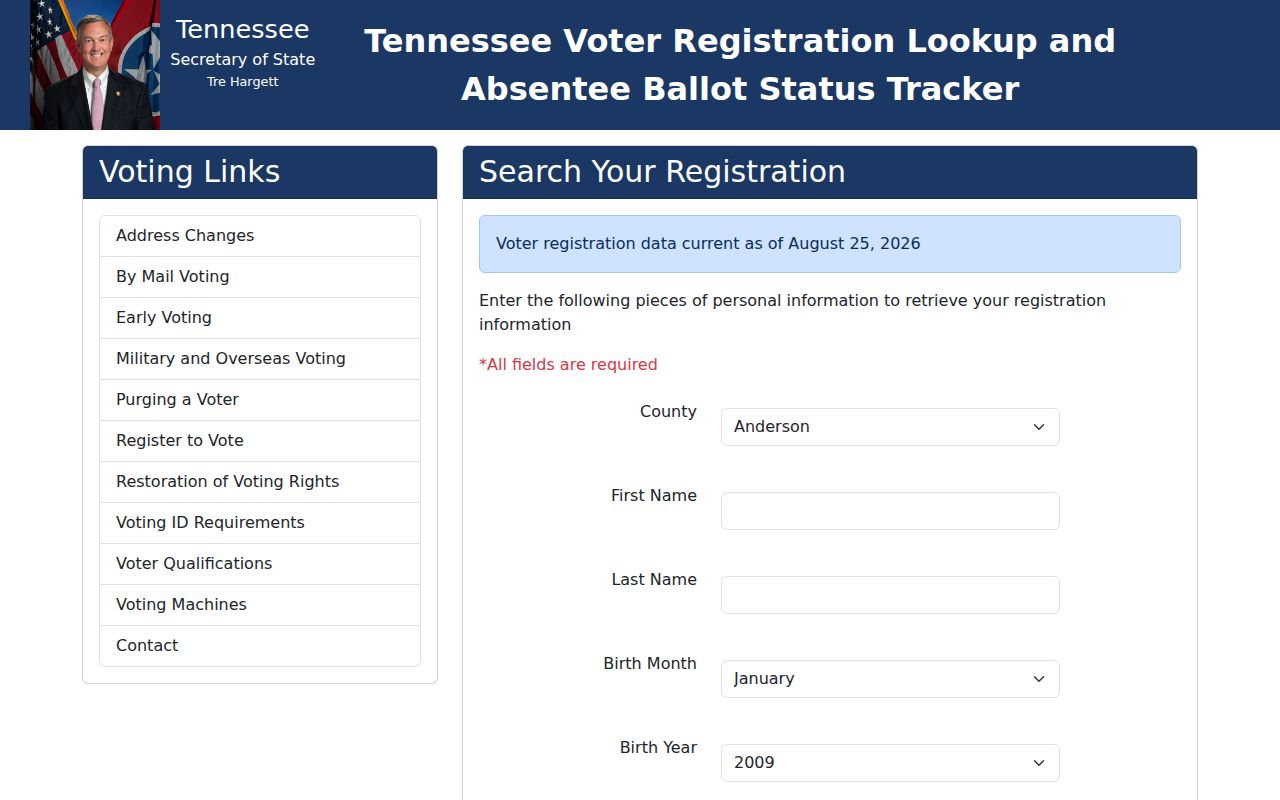
The no-record instruction reinforces that an online result must be followed by the local office when a record needs correction or explanation.